Daydreaming leads to creative thoughts and great new ideas. I have to admit though that as a child my mind might have wandered a bit too much some days in class. One day in a creative writing class in college I was daydreaming about my daydreaming and began to write this poem. Could the child or children in your life identify with it? Can you?
The Test
“Begin Here.” She said
as I looked down to where she was pointing
on the standardized test in front of me.
Begin Here
The words echoed in my ear as my mind wandered off to a fair at midnight
where I would meet up with my friends and then–
“Begin Here.” She said, this time more sternly.
while she waved her hands in front of my face
as I slowly came back to the room and began
filling in the dots with circular black marks.
(But the truth is I am always running off the page)
If there is one woman I look to for inspiration when things go wrong, it is Maya Angelou. In her poem Still I Rise, she joyously proclaims that when people taunt her she will “rise” and that she knows her worth. I love the image of hard dirt transforming, not to mud she is stuck in, but into light dust that easily floats away.
Maya Angelou had a traumatic childhood filled with violence, racism and abandonment, but she did indeed “rise” to be one of America’s most beloved poets and memoirists. She won multiple awards including the Presidential Medal of Freedom in 2010, which is the highest civilian honor in the United States.
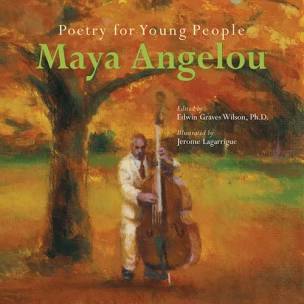
When I teach her poetry to children in The Respect Program, I use the book Poetry for Young People – Maya Angelou. This book is an ideal volume of her work for 8-12 year olds and a great introduction to this remarkable writer.
At the time the book was published, she was the only living author that the Poetry for Young People series chose to honor with a book. She has since passed away, but her beautiful poems will continue to inspire children and adults for generations.
The confident and beautiful rhythm of this poem reminds the reader that we can choose to disagree with the negative voices around us that try to bring us down. In Still I Rise Maya Angelou does not lash out at the person trying to harm her, she just informs them that she has too much confidence to let them bother her.
Activities for Parents and Teachers:
FYI: There is s a verse in Still I Rise about her gender that is explicit. That verse has been removed in the Poetry for Young People – Maya Angelou book so keep that in mind if you find another place with the poem and you want to print it off for children.
Activity 1: Read the child-friendly version with a group of children or a child, asking them to repeat “I’ll rise” or “I rise” each time it appears in the poem. It is a joy to see them get excited about participating!
Activity 2: Ask children: What is Maya Angelou’s approach to dealing with unkind people in “Still I Rise?” Do you agree with her approach? Why or Why not?