Great Stories Build Empathy and Gratitude

Three Thank You Notes I Have Been Meaning To Write…….Addresses Unknown

I

Dear Walt Whitman,

I love writing poetry, like you.  I read “Song of Myself” the other day.  Your beautiful 

poem from Leaves of Grass that I love.

I cannot imagine what it was like for you living during the Civil War but I know what it means to want to celebrate the diversity of people.

We are not the same sex.  You are male and I, well, I am female, but what does that mean I ask myself.  You understand, don’t you?

We need more of your optimistic kind today.  Celebrating in the streets our differences

Thank you for understanding.  I don’t feel so lonely now that I have heard

your voice.

II

Dear Anzia Yezierska,

I am a believer is education for everyone, just like you.

I read your book, Bread Givers, the other day, it was so beautifully written.  

I cannot imagine the poverty on the lower east side of New York you lived through to write about, but I understand your need to walk away from a man who wanted to own you and I know what it is like to feel over worked.

You are of a different faith than I.  You being Jewish and I being, well I am not sure, you understand don’t you?

We need more of your determined kind today.  Standing up to stereotypes by being one’s self.

Thank you for understanding.  I don’t feel so afraid of my future now that I have heard

your voice.

III

Dear Toni Morrison,

I am a woman like you.  I read Beloved the other day. Your masterpiece is what

they are calling it. 

I cannot imagine what it was like to be a slave as you so vividly

write about for the generations now living.  But I know what it is to be haunted by traumatic memories.

We are not of the same race,  You are African-American, I, well I am not sure now what to call myself, you understand, don’t you?

We need more of your empowered kind today.  Teaching people to heal and cultivate diversity.

Thank you for understanding.  I don’t feel so lost in the past now that I have heard  

your voice.

By: Amanda Cook
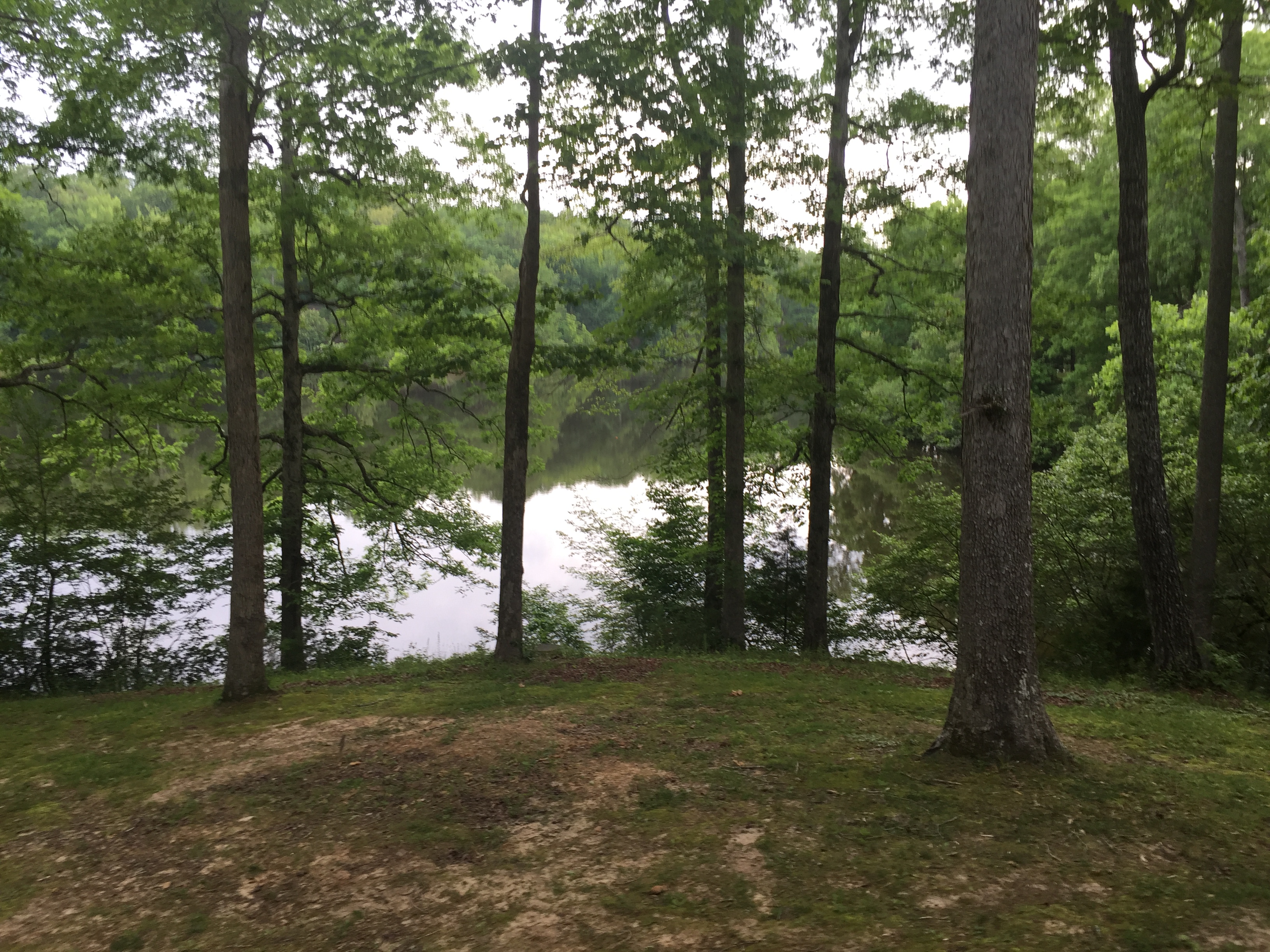
Natchez Trace State Park, the place I like to go to read all the great books that inspire me.

The Power of Journaling for Children and Adults

A journal, I tell children I work with, is a place where you can write anything you want. It is your space to be you. As a child, writing helped me to process bullying I experienced and to expand my creativity. I wrote poems, descriptions of how I was feeling, and commentary on writers who I loved.

Today, I journal regularly. I remind myself that my writing each day doesn’t have to be long to be meaningful. The important thing is that I have an unfiltered place to write about who I am and what I am feeling.

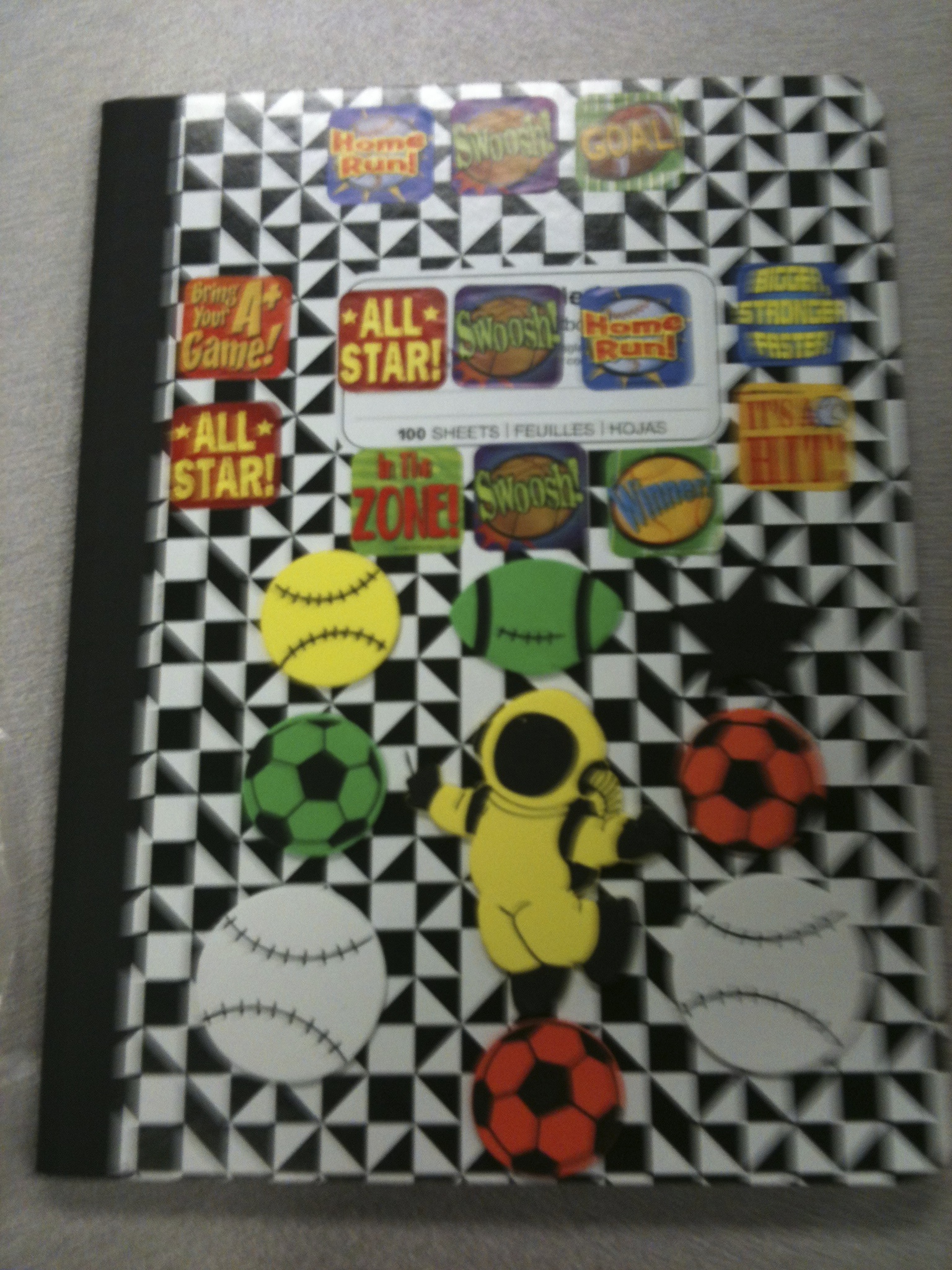
All children and adults can benefit from a journal’s safe creative space. During the lesson in the Respect Program where we create journals, I bring notebooks, markers and stickers. The stickers have a variety of themes: space, sports, fairies, nature, affirmations, and anything else I can find. Then the children get to decorate them. The joy of seeing their eyes light up when they are done is amazing.

Happy journaling to you and the children in your life!

A journal decorated by a child in the Respect Program

Let’s Spread Some Positive Gossip

Negative gossip empowers bullying behavior in most schools and workplaces. It can start innocently enough, sharing with a friend or co-worker about something someone did that we don’t approve of them doing. The danger is that we can’t always trust who we are talking to about our concerns. The fact is, if someone is a gossip, chances are they are also gossiping about you when your back is turned. I wish I had known this as a child making my way through junior high and high school!

Changing our gossip-focused behavior is impacted by compassion and a commitment positive gossip:

  1. First, I remember that when I want to gossip and harshly judge another person’s mistake, I need to stop and have compassion for the person. I also remember that I need kindness as well when I make an error.
  2. Secondly, stop the negative gossip by shifting the conversation to positive gossip about someone. The poem I Know Something Good About You presents this beautifully. Keep in mind that we don’t have to say nice things about someone we hate, especially if this would come off as insincere. Instead, start talking about people you admire and positive things you want to do with your day to end the negative gossip.

Enjoy the poem and spread some positive gossip today!

Know Something Good About You

Wouldn’t this old world be better
If the folks we meet would say –
“I know something good about you!”
And treat us just that way?

Wouldn’t it be fine and dandy
If each handclasp, fond and true,
Carried with it this assurance –
“I know something good about you!”

Wouldn’t life be lots more happy
If the good that’s in us all
Were the only thing about us
That folks bothered to recall?

Wouldn’t life be lots more happy
If we praised the good we see?
For there’s such a lot of goodness
In the worst of you and me!

Wouldn’t it be nice to practice
That fine way of thinking, too?

You know something good about me;
I know something good about you.

By: Louis C. Shimon

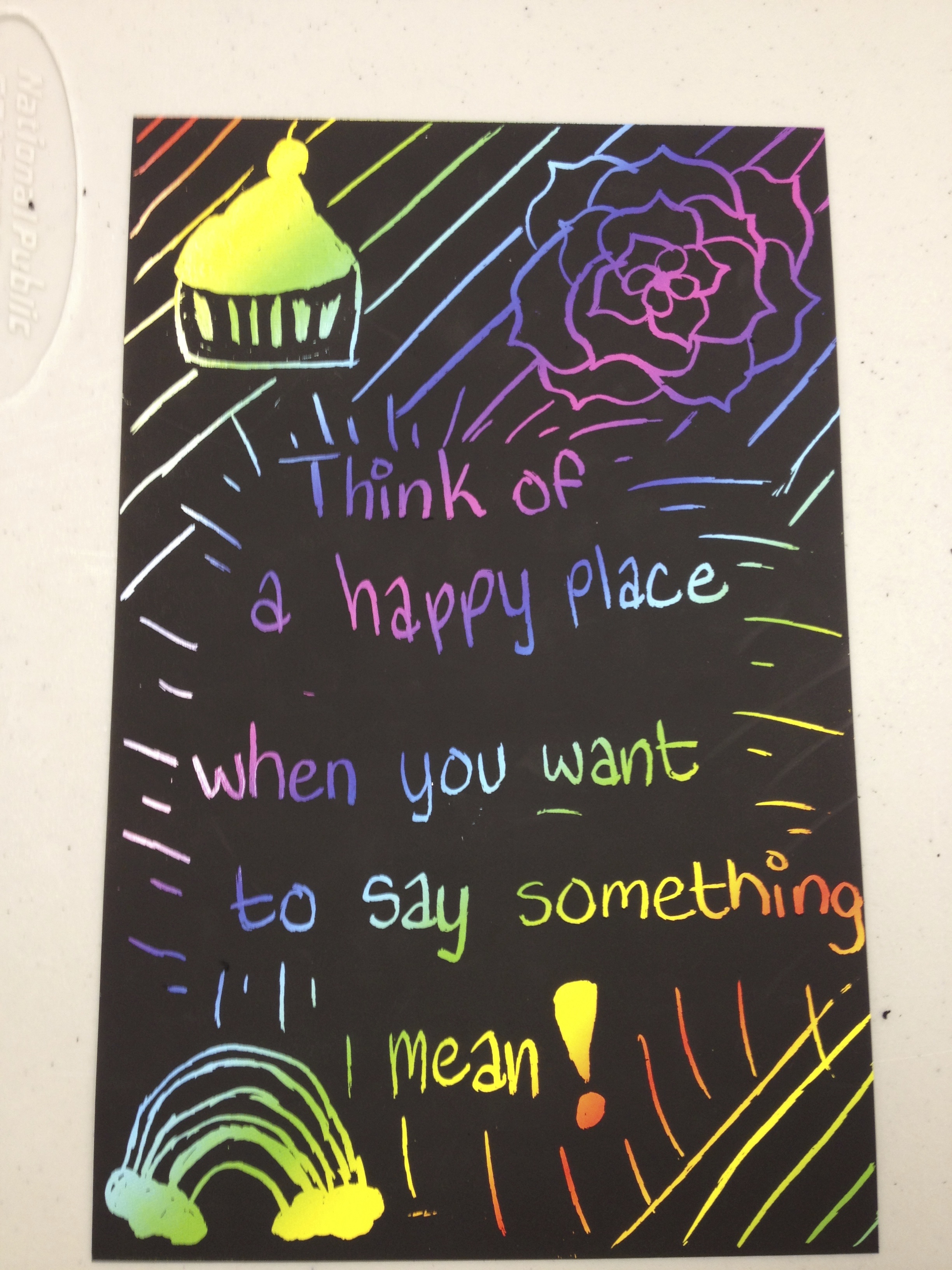
Art from a student in the Respect Program

Stop Bullying Before it Starts with Compassionate Communication

When children or adults are rude to someone, there is a natural reaction to justify that behavior. Such as, “I told them their idea is terrible because it is!” Whether it was a terrible idea or not, telling someone how wrong they are will certainly not solve the problem. Why not ask the person some questions about her perspective on this “terrible idea”? I find that when I stop being judgmental and start understanding the person’s perspective my compassion increases, which opens up a healthy dialogue with that person and allows the two of us to find solutions. This dialogue also increases our ability to work together as a team in the future.

When children (or adults) are caught bullying others, be prepared for a list of reasons that they feel totally justified in their behavior. When we are angry and lashing out, we need to be reminded to:

  1. Learn to deal with anger in healthy ways, like journaling or talking with a trusted friend.
  2. Be open and honest about our role in conflicts with each other
  3. Apologize when we are acting like bullies, and
  4. Make amends. This is not just about saying “I’m sorry,” but rather about being more considerate and kind in the future. Even if most of a situation is not my fault, apologizing for my part in the conflict has led to peace and healing in several of my challenging relationships with friends and co-workers.

This is all easier said than done, but the more we work at these steps, the more productive and fun our time will be with others. Otherwise, one person’s bad attitude can justify repeated bullying attacks, which can escalate over time. Conflicts will always continue to arise in life, but with respect and clear communication, we can work together to resolve issues peacefully.

William Blake wrote about conflict escalating in his poem A Poison Tree. You can find this poem in many collections of his work, including Poetry for Young People – William Blake, which is ideal for children ages nine to twelve. This is a great poem to discuss with children to get them talking about how to deal with conflict and the consequences of letting problems escalate.

A Poison Tree

I was angry with my friend; 
I told my wrath, my wrath did end. 
I was angry with my foe: 
I told it not, my wrath did grow. 

And I waterd it in fears, 
Night & morning with my tears: 
And I sunned it with smiles, 
And with soft deceitful wiles. 

And it grew both day and night. 
Till it bore an apple bright. 
And my foe beheld it shine, 
And he knew that it was mine. 

And into my garden stole, 
When the night had veild the pole; 
In the morning glad I see; 
My foe outstretched beneath the tree.

-William Blake

Remember We Do Everything Imperfectly

I was thinking about my issues with perfectionism today. I sometimes set an impossible standard for myself and then have to reevaluate what is feasible to do. I also have to often remind myself that we are all imperfect and that that is not only okay but wonderful that this imperfection gives us opportunities to grow, continue to improve, and to support those we love. Here is one of my poems where I played with this idea.

What We Are Is Enough

When we love, we love imperfect people,

Because they are the people available to love

When we help, we reach with imperfect hands

Because they are what we have to reach with

When we receive we take in the pain and joy of the world with an imperfect heart

Because it is the heart we are blessed to have.

By: Amanda Cook

Have a blessedly, lovely, imperfect day!

What can Langton Hughes teach us about Dreams for a Better World?

I Dream a World

I dream a world where man
No other man will scorn,
Where love will bless the earth
And peace its paths adorn
I dream a world where all
Will know sweet freedom’s way,
Where greed no longer saps the soul
Nor avarice blights our day.
A world I dream where black or white,
Whatever race you be,
Will share the bounties of the earth
And every man is free,
Where wretchedness will hang its head
And joy, like a pearl,
Attends the needs of all mankind-
Of such I dream, my world!

By:Langton Hughes

This poem was taken from the opera Troubled Island which Langston Hughes wrote with the composer William Grant Still. I love this poem’s vision of how the world should be: filled with kindness, celebrated diversity, and peace. When I talk with children about this poem I ask them who else had a famous dream? They all say quickly, “Martin Luther King, Jr” with great enthusiasm! This then sparks conversation about the I Have a Dream speech as well. Both Hughes and King spoke of how the world should be. The good news is we call can help create that better world, one kind act at a time.

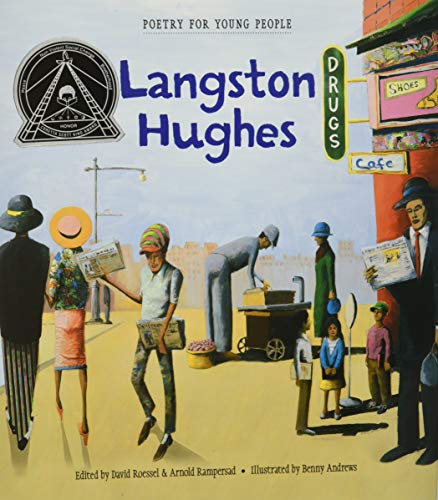
I love how the Introduction begins in the book Poetry for Young People – Langston Hughes. It starts, “From the 1920s until his death in 1967, Langston Hughes was probably the foremost poet among African Americans. His importance for later African-American literature has been immense, for he sought to not only ‘sing’ of Black America in his poems, but also to do so in its every day language.” I am grateful to have heard his experience and voice which brings to life the problems he faced and yet also great joy and hope for the future. The poems in this collection are accessible for children as young as nine. Also, the illustrations by Benny Andrews are spectacular.

From Langston Hughes I have learned to believe in the beauty and importance of having dreams for oneself and for the world. I have also learned more from him about the fight for equality, which he eloquently reveals through his verses. He is a joy to teach to children and his poems provide a great way to start a conversation about what we can do to make the world better.

Activities for Parents and Teachers:

Read the poem with children in your life and ask them what they think about his dream? What dream to they have for the future?

Provide a copy of Langston Hughes poem and the I Have a Dream speech to read to children. I recommend the I Have a Dream children’s book with the speech and beautiful illustrations by Kadir Nelson. Ask the children, “What similarities there are between the two and where are they different?”

Learn about the Harlem Renaissance and share some of the history with children in your life. New York City in the 1920s was home to incredible African -American writers and artists and there needs to be a lot more awareness in the United States of the great books, art, and plays they created.

Questions for the Day for Discussion or Journaling:

What is your dream for the world?

What can you do today to help that dream along?

What can we learn from Robert Louis Stevenson about joy and play?

The Swing

How do you like to go up in a swing, 

   Up in the air so blue? 

Oh, I do think it the pleasantest thing 

   Ever a child can do! 

Up in the air and over the wall, 

   Till I can see so wide, 

Rivers and trees and cattle and all 


   Over the countryside— 

Till I look down on the garden green, 

   Down on the roof so brown— 

Up in the air I go flying again, 

   Up in the air and down!

– Robert Louis Stevenson

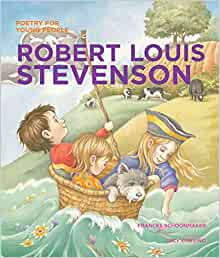
Poetry for Young People,  Robert Louis Stevenson is for readers ages eight and up and it is a great introduction to poetry for children because the poems are from the perspective of children.

I love the pure joy the poem’s speaker is sharing in The Swing. We all need fun recreational activities, as seen in this poem, to help us recharge and experience joy and serenity. Robert Louis Stevenson had serious health problems throughout his life, but he didn’t let that stop him from creating beautiful stories and poems that celebrate play and a child’s imagination.

As a young child, I loved to swing and started writing poems. His poetry inspired me and reminded me of the importance of creativity. Today, I think his poems are more important than ever as a window to a world not filled with smart phones and video games. Adults and children still need to enter a world of play separate from technology and his poems can spark conversation and acitivties with children around this subject.

Activities for Parents and Teachers:

Ask children what they like to do for fun.  Then ask them what they like to do for fun that doesn’t involve a phone, computer or any other type of technology.

Ask them to write two sentences or a poem about an activity that they like to do that doesn’t involved technology.

Questions for the Day for Discussion or Journalling:

What are the activities that brought me joy as a child?  

What recreational activities bring me joy today?  Can I do more of them to help me relax and recharge?

Poetry for Young People, Robert Louis Stevenson

What helps give you a new perspective on life when you need it?

Whenever I am overwhelmed by my daily challenges, I can look at pictures of our solar system, nebulas, and galaxies for a reminder of how vast the mysteries of the universe are and how I need to keep things in perspective. 

I also use poetry to think about the seen and unseen world and let my imagination flow. In addition to thinking about the size of the universe, I remember when I was in high school learning about the universe within each of us – tiny organisms that we cannot see without a powerful microscope. To those organisms we are the solar system, nebula or galaxy!

Years after the biology class, I wrote the following:

The Storm

What if, inside the eye of a needle, whole worlds existed?

People in little steel towns with silver soil that could not be cultivated

reaching for strands from the giant worm that periodically blacks out their sky.

What if, inside the binding of a book, a community lived?

People hunting dust mites for food and living in musty darkness, attributing the

movement of the book to an earthquake, living out their lives in the smell of ancient stories.

How would your perceptions change?

Creatures, scientists say, live on people’s eyelashes, and 

when we cry they experience a salty storm.  

They harm no one, and go on with life, content that what they see isn’t what they get,

not knowing the massive giant they rest upon, not knowing what the storms mean.

By: Amanda Cook

Always, I am humbled and amazed at the vastness of the universe and all the life that is around me that I cannot see. No matter what is bothering me today, I need to remember that there is beauty all around us.  

What specific talents and joys help you remember your worth?

There is a charming book I read in programs for children ages 4 – 8 called “I’m Gonna Like Me – Letting Off a Little Self-Esteem.” The book is filled with great illustrations by Laura Cornell and was written beautifully by Jamie Lee Curtis. I particularly like that the speaker loves herself not only for her talents, but also when she makes mistakes.  

The book ends with a question: “I’m gonna like me, I already do, but enough about me, how about you?”

Giving a child a chance to speak up about their abilities, talents and things they enjoy doing is inspiring. I love seeing their faces light up when they share things that mean the world to them.  

So many children, and adults, have been told they don’t matter. When we hear this message over and over again from others, we can start to believe it if we forget to value ourselves. 

Remember, we are all enough and there are things each of us is passionate about that help us grow, contribute to the world in a positive way, and relieve our stress.

We all need to be reminded of the treasurers within each of us to thrive in this world.  One activity I do with children around this issue is to ask them to write on a piece of paper what they love about themselves.  Then they get a wooden box to decorate and I tell them to place the word in the treasure box to remember their amazing talent.  Here is one child’s work from one of my classes:

Have a great day filled with creativity and high self-esteem!

What can we learn from Robert Frost about opportunities to build friendships?

The Pasture

I’m going out to clean the pasture spring; 

I’ll only stop to rake the leaves away 

(And wait to watch the water clear, I may): 

I sha’n’t be gone long.—You come too. 

I’m going out to fetch the little calf 

That’s standing by the mother. It’s so young, 

It totters when she licks it with her tongue. 

I sha’n’t be gone long.—You come too. 

-Robert Frost

At the age of 23 I started graduate school at Carnegie Mellon University in Pittsburgh. I had been through a lot of bullying in my life and didn’t trust many people. And here I was, in a new city were I didn’t know a soul. I slowly began to meet people and one day early in my time there, a woman I had met in my classes called me and said, “I free today, want to do something?” “Yes” I replied. At the time it struck me that I wouldn’t have had the courage to make that simple request of someone.  We became good friends and to this day I appreciate the fact that she reached out.

Sometimes all it takes is an invitation to open someone up and begin a great friendship. The simple act of invitation is why The Pasture is such an important poem for children and adult alike to ponder.  While most people do now live in cities and have different chores, the simple act of the speaker inviting someone into their daily experience is filled with serenity and kindness. Serenity in that there is no complaining about what the speaker has to do and kindness in wanting to share that peacefulness with someone else.

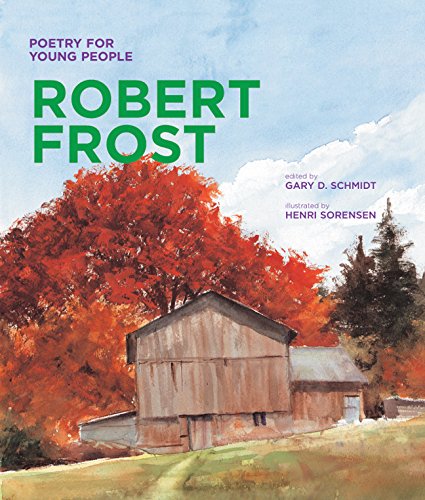
I read this poem for the first time with my parents as a child and I was struck by the gentleness of the speaker and the peacefulness of the world that child describes. In my 30s I taught children in Memphis about Robert Frost and used the Poetry for Young People – Robert Frost book as a reference. 

The book is ideal for 8-14 year olds and this poem in particular opens the door to discuss invitations we can make to grow and strengthen friendship. This poem doesn’t end with the other child saying “yes” although I would like to believe she did. However, even if she didn’t, it was well worth the effort of the child speaking in the poem to say, “You come too.” Because an invitation to spend time with someone is a great gift we all can give another human being. It allows us to communicate clearly to another person that they are important and valued.

Activities for Parents and Teachers:

In Poetry for Young People – Robert Frost, a couple of lines of commentary are included about this poem. The book’s editor explains that this poem is an invitation, but also that “Frost is…asking his reader to come into his world —a world of pastures, leaves, spring, and young calves newly born.” Ask children if they would say “yes” to the speaker of the poem and why.  

While most of us don’t have access to a farm, invite your children to a green space, a park or national wildlife refuge, to see a grassy area or stream for themselves. Talk about the fish and birds that use the area for habitat. Ask each child to invite a friend to attend, just like Robert Frost did.

Questions for the day for discussion or journalling:

When was a time that someone invited you somewhere fun?  How did you feel when they asked you?

Do you know someone who you could get to know better by inviting them to hang out with you?